
Vince Gironda’s 8X8: 64 Reps, 30 Seconds Rest, Nowhere to Hide
I’ll admit my bias up front: I have enormous respect for the training of the 1960s and ’70s, and very little patience for most of what’s replaced it.
Look at the men of that era — Chuck Sipes, John Grimek, Franco Columbu, Larry Scott, Ed Coan. Lean, athletic, and as strong as they looked. No physiques that fold the second a heavy barbell appears. They built it the hard way: full-time jobs, three or four evenings a week in the gym after a day’s work. That’s what separates them from most of today’s “athletes” — they were exactly as strong as they appeared.
No nonsense, no shortcuts. Black coffee, meat and potatoes, heavy iron, get better. That was the whole philosophy — and it still beats most of what’s marketed today.
Vince Gironda trained a lot of them. His methods still work. Most people just can’t survive them.
Who was Vince Gironda?
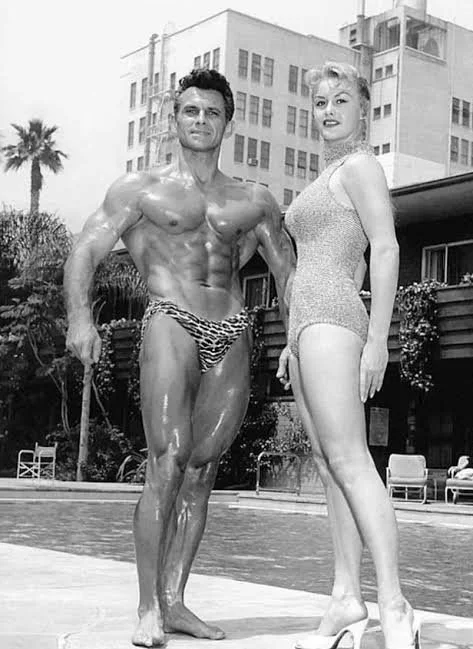
Vince Gironda — “The Iron Guru” — was a trainer, bodybuilder and author who shaped strength sports and bodybuilding as we knew them, back before Instagram influencers and poseurs took over.
He was decades ahead on nutrition: supplementing vitamins and minerals, low carbohydrate, high cholesterol, heavy on eggs and red meat. He famously claimed that eating 20 to 30 pasteurised eggs a day was the natural equivalent of anabolic steroids for building muscle. Make of that what you will — then look at who he built.
Gironda trained Frank Zane, Don Howorth, Lou Ferrigno, and a young Arnold Schwarzenegger. Then Hollywood came calling. From the 1950s until his gym closed in the early ’90s, he kept leading men and women camera-lean: Clint Eastwood, Denzel Washington, James Garner, Brian Keith, Tommy Chong. When a studio needed a physique by a deadline, they sent their star to Vince.
It’s hard to argue with the man’s results.
The Gironda’s 8X8
Gironda’s training was high-intensity and high-density — heavy loads, serious volume, almost no rest. He had a name for the secret: density — work done per unit of time. More work in less time, higher density. The 8×8 is density weaponised, and he called it the “honest workout,” because the short rest won’t let you cheat, ego-lift, or hide.
The rules are brutally simple:
6 to 7 exercises per session.
8 sets of 8 reps on each.
30 seconds’ rest between sets. No more.
Load it with your 10-rep max.
Hit all 8 sets of 8 — 64 reps — and the weight goes up next session. Can’t hold 8 a set, it comes down. That’s the entire progression. No app, no RPE debate. The clock and the rep count do the coaching.
A word on the weight, because this is where people get it wrong. Gironda’s rule is to start with your 10RM. But with 30 seconds’ rest, a true 10RM collapses by the fifth set — so in practice you load it to give you at least five clean sets of eight, then fall one or two reps short on the last three. For some people that lands nearer a 15RM; your muscle-fibre makeup and recovery capacity decide. The one mistake you can’t afford is underloading — go too light and you miss the hypertrophy response entirely. Better to slightly overestimate; worst case, you shave a little off as the sets go on.
A sample session — Gironda style arms
Here’s an arm day built on the method. Why arms? Experience. Over the years, I’ve found that arms and back respond best to high-density, high-volume work — they take the punishment and grow from it, which makes them the ideal target for the 8×8.
A1. Dips - 8 × 8, 3010, 30s
B1. Dumbbell triceps extension - 8 × 8, 3010, 30s
C1. Triceps press down - 8 × 8, 3010, 30s
D1. Barbell biceps curls - 8 × 8, 3010, 30s
E1. Dumbbell hammer curls - 8 × 8, 3010, 30s
F1. Cable biceps curls with pronated grip - 8 × 8, 3010, 30s
A sample session - 8X8 finisher
The arm day above is the 8X8 in its purest, most brutal form. But that’s rarely how we use it. More often it’s a finisher — and here’s what that looks like inside a full session: upper-body-focused work first, then the 8×8 bolted on at the end to hammer a lagging area once the heavy lifting’s done. Run twice a week, the frequency most of our clients train at.
Full Body Session A:
A1. Flat bench press with wide grip - 6,6,4,4,2,2, 4010, 120s
A2. Chest supported row - 10,10,8,8,6,6, 4010, 120s
B1. High bar back squat with narrow stance - 5X4-6, 4010, 180s
C1. Incline dumbbell bench press - 8X8, 3010, 30s
D1. Straight arm pulldown - 8X8, 3010, 30s
Full Body Session B:
A1. Standing overhead press - 6,6,4,4,2,2, 4010, 120s
A2. Chin up with neutral grip - 6,6,4,4,2,2, 4010, 120s
B1. Deficit deadlift - 5,5,5,3,3, 3201, 180s
C1. Dips - 8X8, 3010, 30s
D1. Standing hammer curls - 8X8, 3010, 30s
How we run Gironda’s 8X8 at Momentum
The 8X8 is one of our favourite tools, and we reach for it in two places: metabolic phases, when the goal is fat loss, and hypertrophy phases, when the goal is size. Either way it’s a body-composition weapon — the short rest and relentless volume drive a huge metabolic cost while still loading the muscle hard enough to grow it. Load it properly and you’ll know: the soreness runs deep for days, and straight after the session your arms are so engorged that mixing a shake in a shaker becomes a genuine challenge.
That said, we rarely run a full 8X8 session like the one above. More often we use it as a finisher — one or two exercises at the end of a workout to bring up a lagging body part: biceps curls, leg curls, leg extensions, pull-ups, chin-ups, push-ups. Eight sets of eight on a weak point, once the heavy work is done, is one of the fastest ways we know to force it to catch up.
But it is not for everyone, and we mean that literally. The 8X8 only works on a trainee who’s earned it: enough work capacity to survive the volume, and enough strength to handle loads worth lifting. Hand it to a novice, or someone with no strength base, and you don’t get a training effect — you get an exhausted mess with nothing to show for it.
So we don’t guess. Before anyone runs a block like this, we measure — strength, work capacity, structural balance — and confirm they’re ready for the load. Earn the right, then do the work.