
The Best Personal Trainer in Amsterdam: How to Actually Choose One?
Amsterdam doesn’t have a shortage of personal trainers. It has a shortage of good ones.
Walk from De Pijp to the Zuidas and you’ll pass dozens of gyms, studios and freelancers, all promising the same thing: results. Finding a trainer was never the hard part. Choosing the right one is.
Personal training is one of the easiest careers in the world to enter. A weekend course, an online certificate, and you can legally put your hands on someone’s health. No medical board. No licensing exam. No real barrier. So for a lot of people, it becomes a career between careers. The burnt-out marketer working out what’s next. The student filling a gap year. The ex-athlete who was good at training himself and assumed that was enough. Nothing wrong with any of them as people — but “I like the gym” is not a qualification.
Here’s why that matters more than it sounds. A personal trainer can make you or break you. They decide how you move under load, what you eat, how you recover. They can heal a long-standing injury — or hand you a new one. Done properly, a coach is the missing link between your GP, your physiotherapist and your nutritionist: the one person who sees how all of it connects, and actually does something with it.
That’s a serious amount of influence over your body. And most of the people holding it can’t explain basic anatomy, physiology or exercise science. They’re not coaching from knowledge. They’re coaching from a template and a hunch.
For most, personal training is a step in between. For a few, it’s a profession — anatomy, biomechanics, physiology, programming, and years of applying it to real people. Those are the ones worth your time and your money. The hard part is telling them apart.
This guide is for people who want to choose well. No bought rankings, no “top 10” filler. One question separates the best personal trainers in Amsterdam from the rest — and the criteria to hold any of them to.
The one question that separates the best: do they measure, or guess?
Most personal training in Amsterdam runs on guesswork dressed up as expertise.
A trainer looks at you, asks what you want, and writes a plan based on a hunch. Some of it works. Most of it is a coin toss — because nobody actually knows where you’re starting from. How efficient your heart is. How strong you are for your age. What your blood is doing. What’s driving the fat that won’t move.
The best coaches don’t guess. They measure.
Before a single session, a serious coach should know your real numbers: body composition, VO2 max, strength, movement quality, and ideally your blood markers and biological age. Then they build the plan around your data — not around what worked for the last person through the door.
That’s the line. On one side, trainers who guess and hope. On the other, coaches who measure and know. Everything else — the equipment, the playlist, the follower count — is noise.
The three types of personal training in Amsterdam
Strip away the branding and you’re really choosing between three models.
Commercial gyms with personal training. The big chains — cheap, convenient, on every corner. You train on a busy shared floor, and the coaching runs off templates with little real assessment behind them. The trainers are often junior and carrying too many clients to give any one of them proper attention. Fine if what you need is supervision and someone to make you turn up. Not where you go for a precise, individual result.
Transformation studios. The high-intensity end — Ultimate Performance the best-known name globally. Founded by Nick Mitchell in 2009 and, since 2024, a private-equity-backed group with studios across the world — one clear specialism: fast, dramatic physique change, and for that single goal on a deadline, it delivers.
But that’s the whole frame — physique, not physiology. The “transformation at all costs” model has a cost the before-and-after photo never shows. Push someone into a deep enough deficit for long enough and the body starts shutting down anything it treats as non-essential. In women, one of the first things to go is the menstrual cycle — a clear sign the body is under-fuelled and switching off, not a sign of progress. You can get lean and unwell at the same time.
That’s the gap between looking healthy and being healthy. A transformation studio optimises for the photo on the deadline. It isn’t built for injury rehabilitation, long-term performance, or how your body ages in the decade after.
Momentum is built the other way round. We measure — blood, hormones, recovery — so we always know how hard we can push without pushing you into that hole. Results that cost you your health aren’t results.
Wellbeing studios. The newest and fastest-growing category — beautiful spaces built around the experience of being healthy. Infrared saunas, cold plunges, a post-session protein shake, great coffee, a real sense of community, and a very good chat. None of it is a bad thing, and for a lot of people the atmosphere is what keeps them turning up. But look closely and the training is often the smallest part of the offer. The sauna is excellent; the programming is an afterthought. You leave feeling well looked after — which is not the same as being stronger, fitter, or measurably healthier. Wellness is a feeling. Progress is a number.
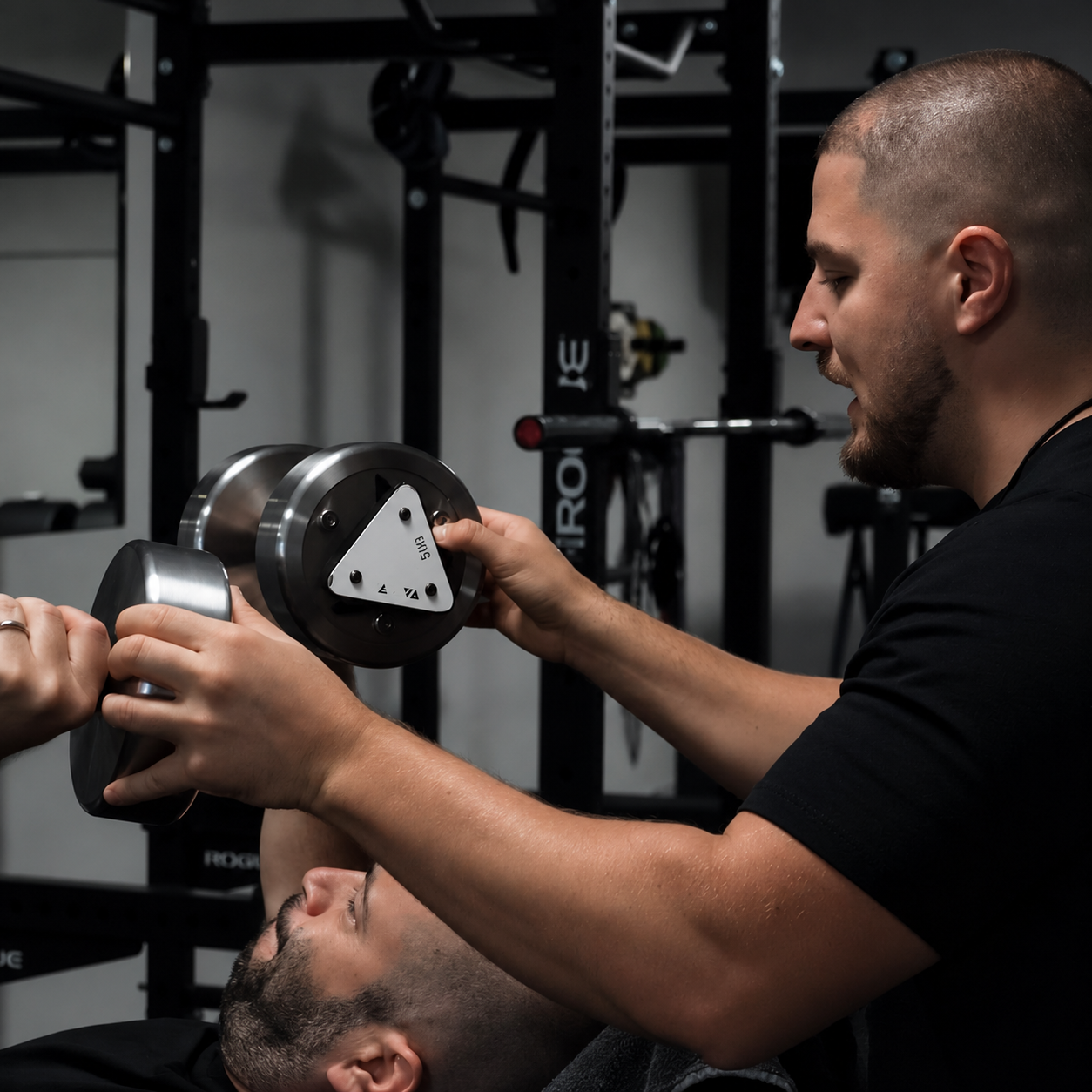
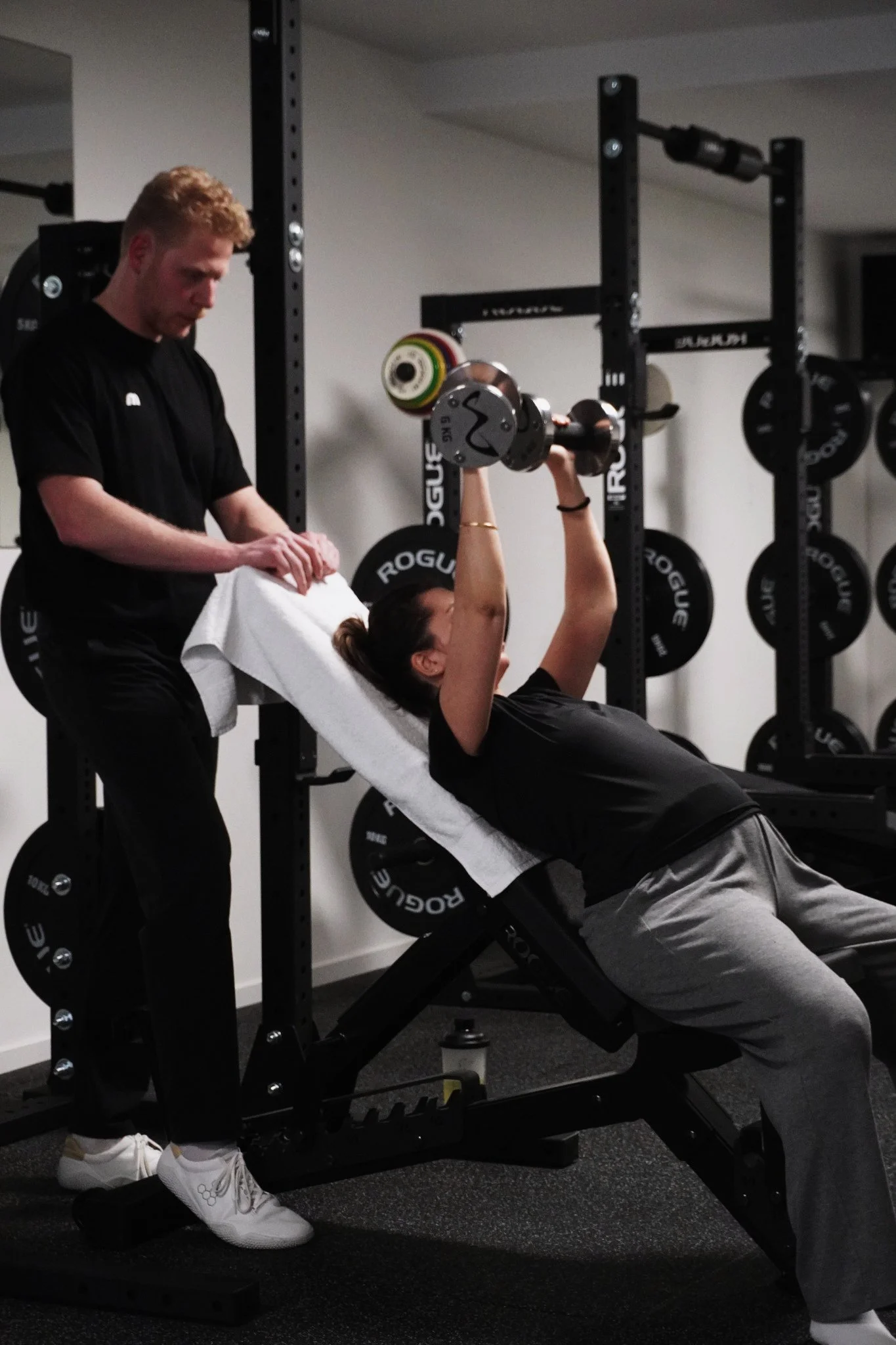
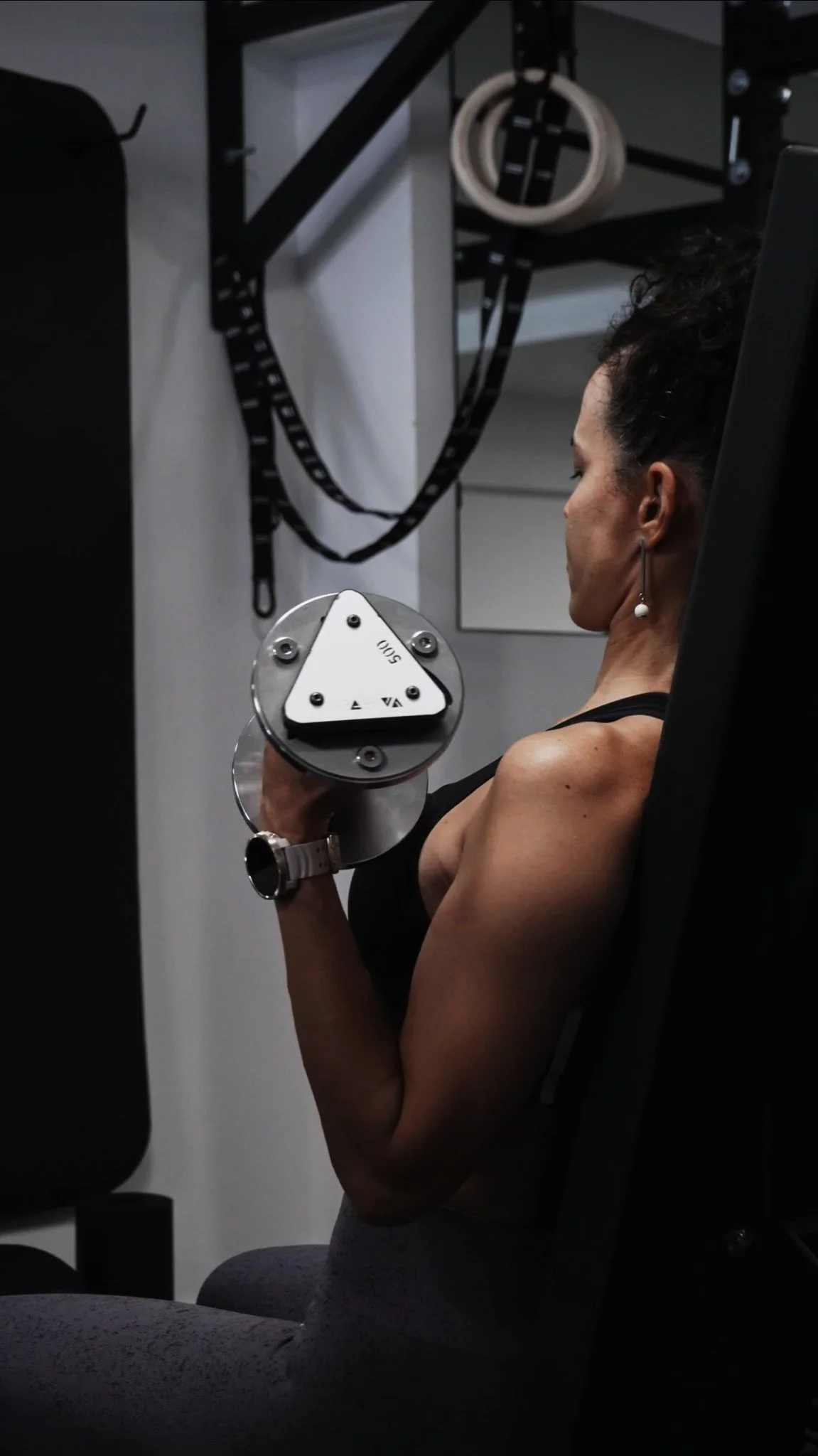
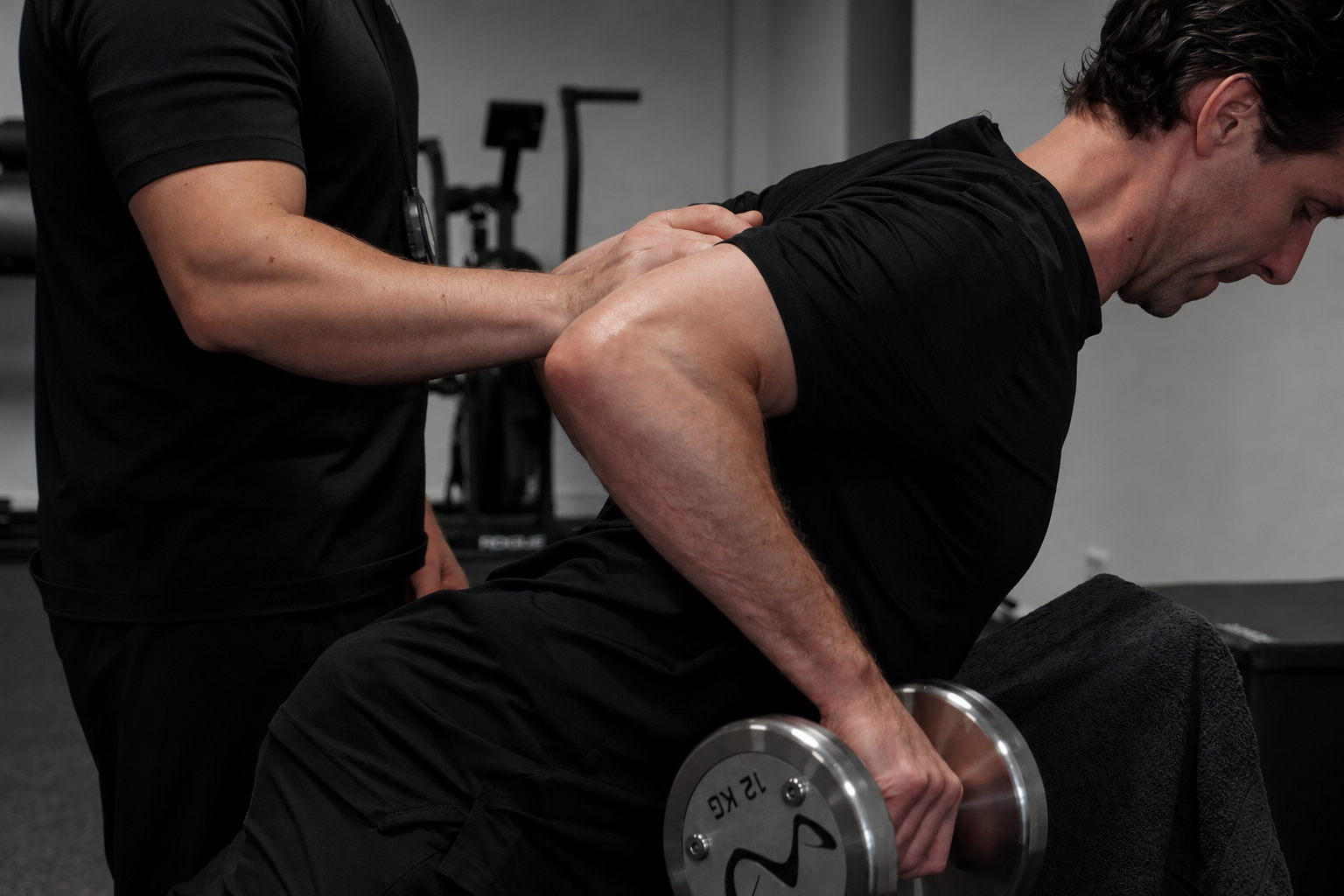
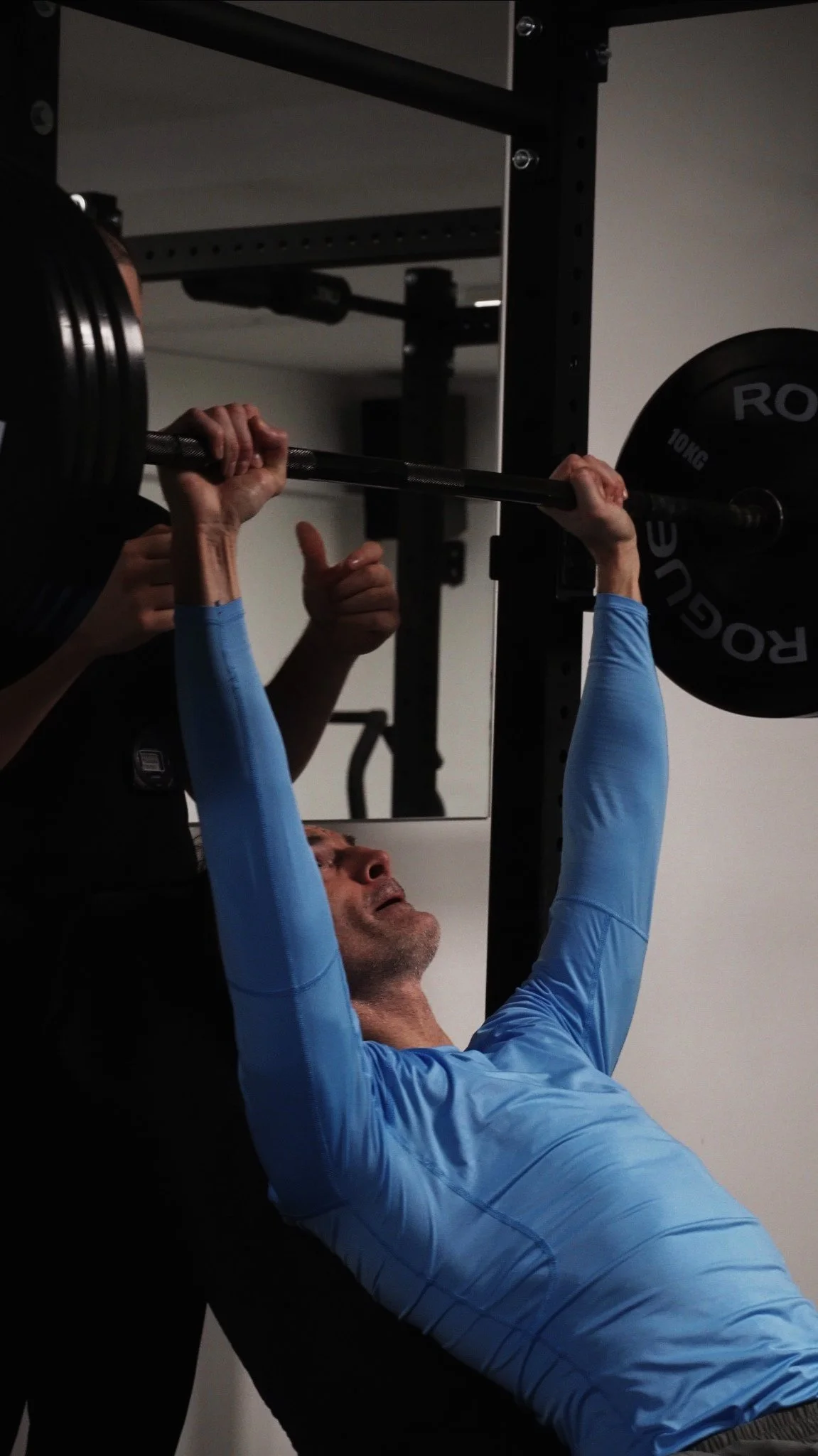
A measured training facility. This is where the other three fall short, and where Momentum sits. It’s a private studio built to do one thing properly: actually train you — hard, individually, 1:1 — and prove it’s working. Not a shared floor and a template. Not a physique bought at the cost of your health. Not a spa with dumbbells. You train to get stronger, fitter and more capable, and everything that goes in and everything that comes out is measured: blood work, VO2 max, body composition, strength, movement, biological age. Nutrition, sleep and recovery are built in, not bolted on. The result is the opposite of guesswork — a plan built around your numbers and your real life, for a professional who wants to look better, perform better, and still be strong at 70. It’s the premium option. It’s also the only one of the four where the training, and the proof, come first.
Before you hand anyone your money or your body, ask:
Do you measure where I’m starting — or guess? Blood work, VO2 max, body composition, movement. If the answer is a tape measure and a hunch, keep walking.
Is the programme built around my data, or a template everyone gets?
What are your actual qualifications? A weekend certificate and a good physique are not the same as a clinical background.
Is it genuinely 1:1 and private, or am I sharing the floor and the coach’s attention?
Do you cover nutrition, sleep and recovery — or just the hour I’m in the gym?
How do you track progress — objectively, with numbers, or by how I “feel”?
Can you coach my situation — injury history, a desk-bound job, a travel-heavy schedule?
If a studio can’t answer these clearly, your results will be temporary. The best personal trainers in Amsterdam answer every one without flinching.
Why measured coaching wins
Here’s the uncomfortable truth: effort isn’t the problem for most professionals in Amsterdam. You already work hard. You train. You’re busy, not lazy.
The problem is you’re flying blind. You don’t know your VO2 max, your biological age, or what your blood is telling you — so you can’t know whether what you’re doing is adding years or quietly taking them.
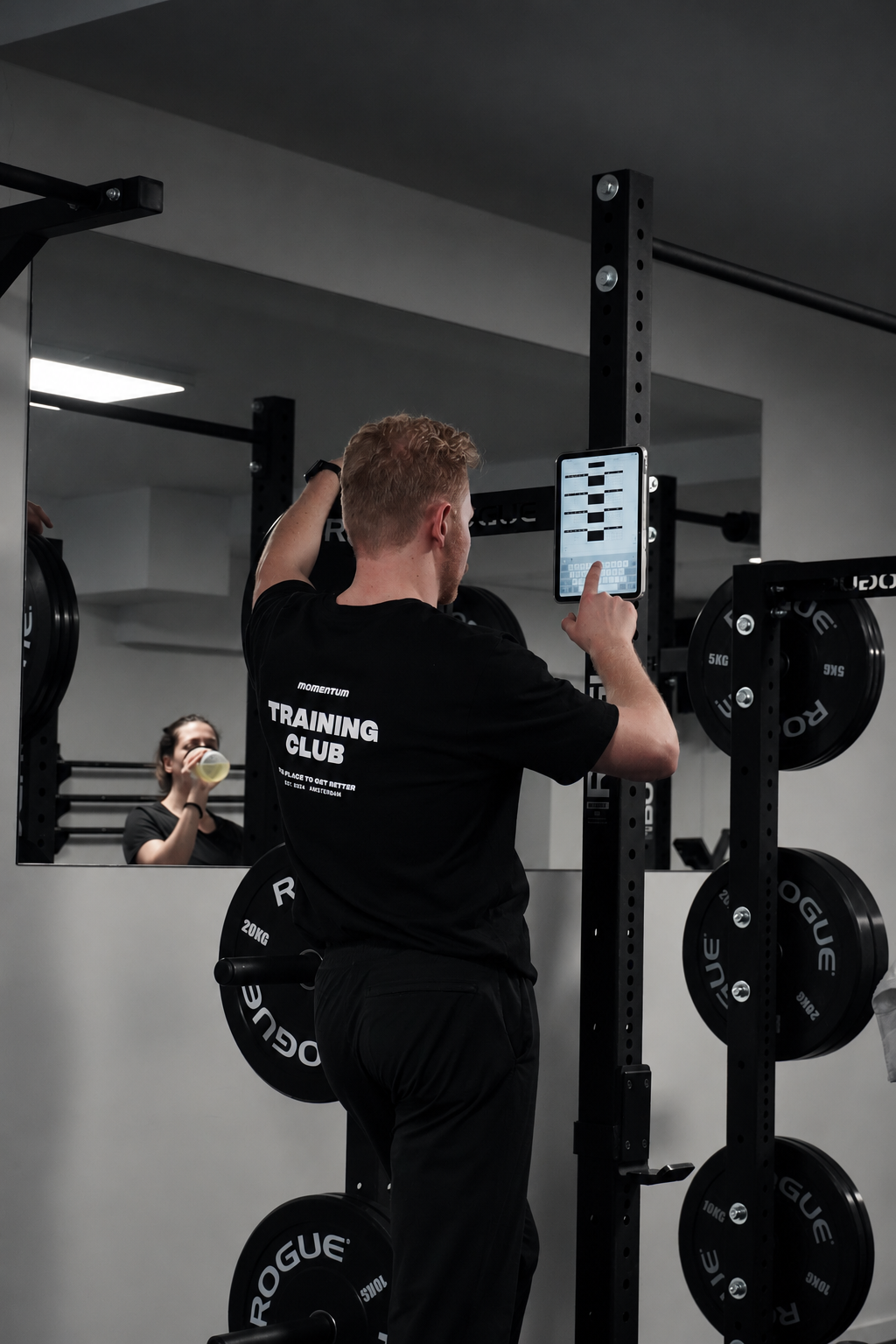
Measurement ends the guessing. At Momentum, every client starts with a Body Audit: blood work, VO2 max, body composition, strength, movement and biological age, benchmarked against your age group and turned into a written report and a prioritised plan. From there, training, nutrition and recovery are built around your numbers — not a template, not a trend.
It’s private coaching on Albert Cuypstraat in De Pijp, minutes from the Zuidas, for professionals and expats who take their health as seriously as everything else in their life. Three clients at a time. By appointment only. Not for everyone — and not pretending to be.
Frequently asked questions
How much does a good personal trainer in Amsterdam cost? Premium private coaching generally starts in the low hundreds per month — you’re paying for expertise, privacy, and a plan built on your data, not a gym session. The smarter first step is a one-off Body Audit (€199) to see exactly where you stand before you commit to anything.
What makes the best personal trainers different? They measure instead of guessing, coach 1:1 and privately, and build the plan around your data, not a template. And they have a real track record — not a wall of Google reviews, but the things that actually predict good coaching: a proper education (a degree, not a weekend certificate), ongoing courses and seminars, and skin in the game — they compete themselves, in strongman, weightlifting, bodybuilding or sport. Above all, they get their clients measurable results, again and again.
Is private personal training worth it over a commercial gym? If you want a precise, lasting result rather than supervision, yes. If you just need accountability to turn up, or are looking for a community, a gym is enough.
Where is Momentum based? A private studio on Albert Cuypstraat in De Pijp, minutes from Amsterdam Zuid.
How do I find out where my health actually stands? Book a Body Audit — one session, a full read on your health, and a clear plan of what to change first.
The bottom line
The best personal trainer in Amsterdam isn’t the biggest gym, the loudest marketing, the nicest sauna, or the hardest grind. It’s the coach actually qualified to put hands on your health — one who measures before they prescribe, trains you properly, and builds the plan around you and your numbers, not a template or a transformation deadline. Everything else is branding.
If you want to know exactly where you stand — your strength, your VO2 max, your biological age, the whole picture — that’s what the Body Audit is for. Sixty minutes, a complete read on your health, and a clear plan of what to fix first.
Book your Body Audit — or book a free consultation to talk it through first.